
You avoid the special assessment
Without sufficient cover, the repair of a common element is shared among owners. With it, the building is repaired without a tense meeting.
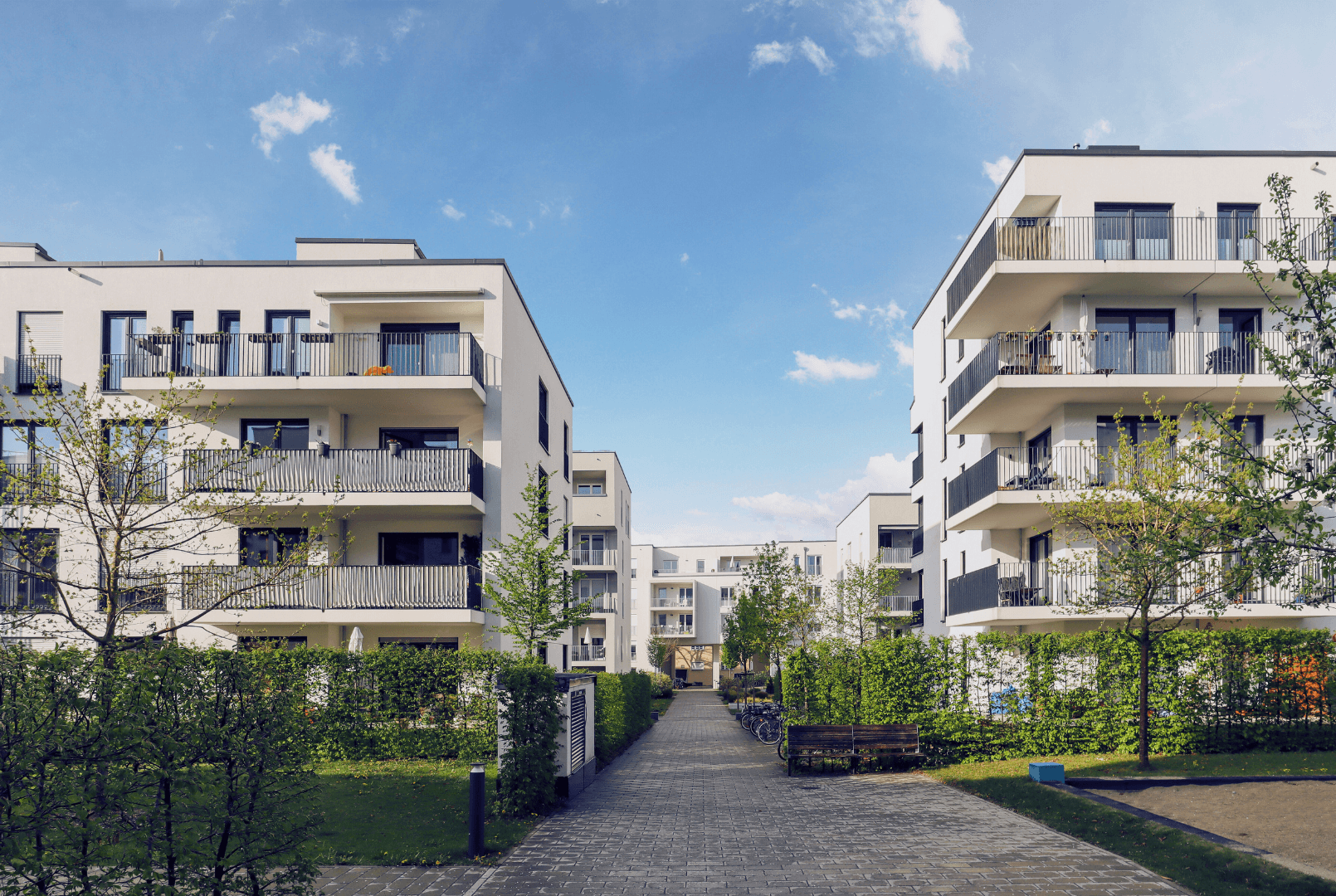
At JORI, we understand the importance of keeping your community safe and protected.
Community insurance covers the common elements of the building and the civil liability of the community towards third parties, including the neighbours themselves. It is mandatory in most communities by regional regulations or by statutes, and its critical point is the building capital: most buildings are insured below their actual reconstruction cost, which activates the proportional rule in any large claim.
Without sufficient cover, the repair of a common element is shared among owners. With it, the building is repaired without a tense meeting.
The position is rotational and the president is liable with their assets for decisions made. With the board guarantee, presiding is no longer a personal risk.
The technical report determines if the origin is common or private. Without it, the discussion between neighbour and community drags on for months.
Being able to prove that the cover is aligned with the real reconstruction cost is what protects the administrator when a major claim occurs.
Professionals who are accountable to the board for the suitability of the cover contracted.
Positions that assume personal responsibility for decisions made in the course of their duties.
Buildings under renovation, with added exposure during execution.
Complexes with common areas, swimming pool, lifts and contracted staff.
Our specialists' experience turns every risk into knowledge, and that knowledge into a solution designed for you and your family.
Every client faces a unique situation. We analyse each client's specific risks to detect vulnerabilities, assess security measures and propose improvements that strengthen the protection of their assets.
All our programmes are designed to integrate every cover needed and to bring peace of mind to those who trust us.
We carefully select insurers and design exclusive insurance programmes, adapted to each client's particular circumstances, with a fully tailor-made approach.
Claims are the most vulnerable moment for a client. That is why it is so important to have specialists who provide support throughout the process.
Six generations and more than 130 years devoted to insurance.
In several autonomous communities it is mandatory by their own regulations, and in the rest it is usually imposed by the statutes or by board agreement. Regardless of the formal obligation, not having it exposes the owners personally to be liable for damages caused from common elements.
By total reconstruction cost, including demolition, technical fees and licences, not by market value of the flats. In buildings of a certain size, we recommend expert valuation: it is the only way to eliminate the discussion about underinsurance on the day of the claim.
It depends on where the origin is. If the fault is in the downpipe, riser or common installation, the community pays; if it is in the private installation of the flat, the insurance of that owner pays. Determining the origin with a technical report before discussing is what prevents the matter from becoming entrenched.
Only if the civil liability cover of the board of directors has been contracted. The president and board members are personally liable for decisions made in office, and it is a cheap cover that many communities do not have.
The community policy does not cover the execution of the work. The contractor's RC and all-risk construction must be required, and it must be verified that the community is listed as an additional insured. This is the point we always review before a facade or roof rehabilitation.
The community's RC covers damage to people by accident in the lift. The fault of the apparatus itself corresponds to the maintenance contract, and damage to the lift itself by a covered claim is included in the building structure. These are three different avenues that should be clear in advance.